Welcome to La Paz
No trip to Bolivia would be complete without a visit to the capital, La Paz. The city sits in a large bowl that was carved out by a river with large buildings of the city center in the bottom of the bowl and houses dotting the edge of the bowl all the way to the rim. The city is most famous for its altitude - 3660 m (12,000 ft), and huffing up the hills is not uncommon, but it does have some other things to offer.
Overall I think we end up staying longer in La Paz than most tourists and I cannot really say that we did all that much. But the city kind of grew on me and I enjoy our time walking through La Paz.
 |
| La Paz with the ever-present Mt. Illamani in the background |
The city was founded in the 16th century and has grown ever since with an influx campesinos (rural, mostly indigenous folk) coming relatively recently. So while parts of the city are staring to develop with clean, modern architecture there is still a layer of grit, graffiti and garbage. If I was mayor for a day the first thing I would do is power wash the whole place. But there are still numerous, well-maintained colonial gems to be spotted around town. There is also a blend of all classes of people: men in suits, men chewing coca leaves, teens in the latest fashions and many women wearing their traditional skirts and bowler hats.
 |
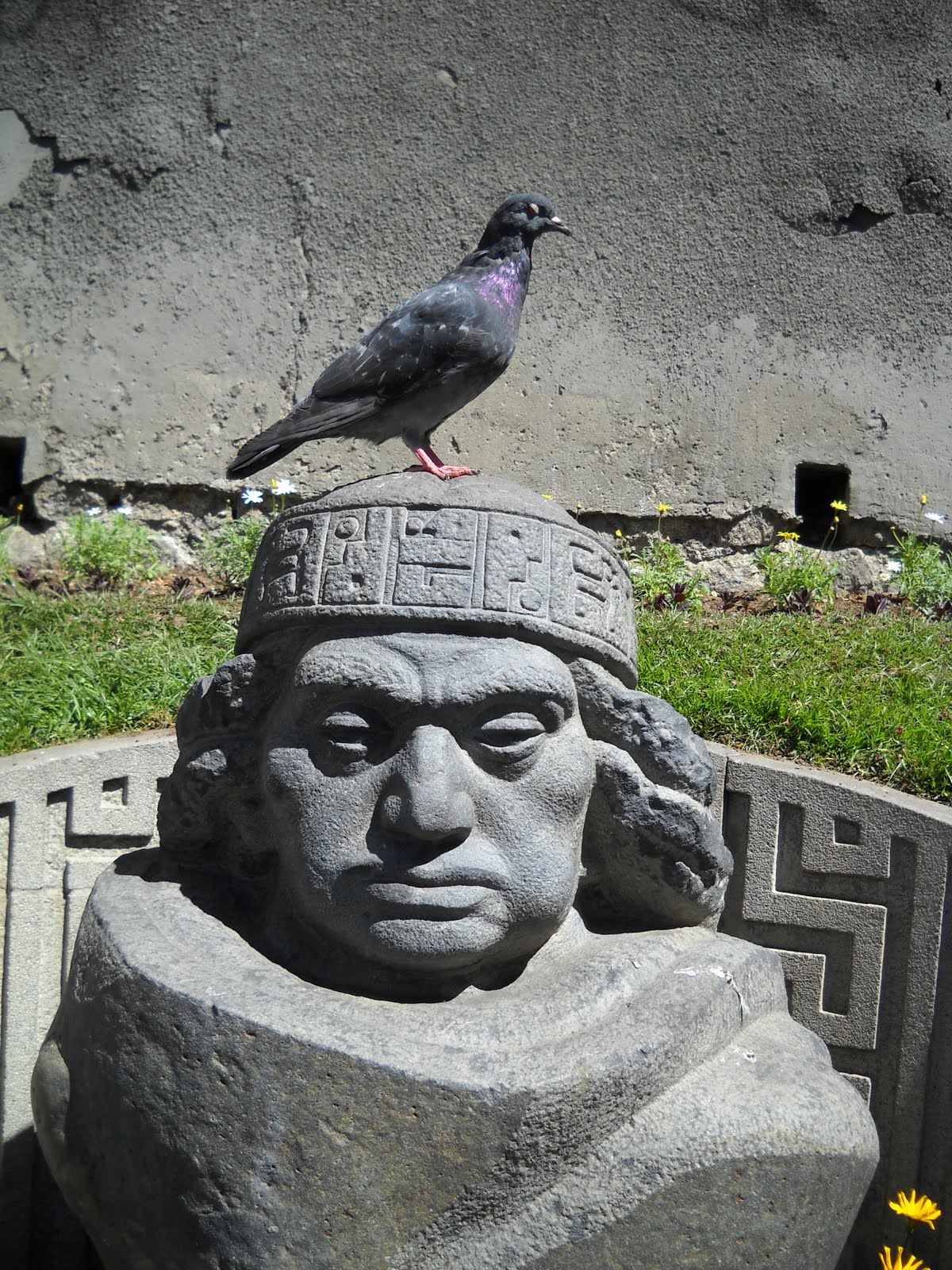
| A sculpture dedicated to an Aymara leader |
 |
| Contemporary art museum in a mansion designed by Gustave Eiffel |
 |
| A theatre |
 |
| The bowler hat |
 |
| A fruit seller having a nap |
We have two different stays in La Paz one week apart. We first stay in the main tourist area with numerous hostels, travel agencies, tourist restaurants and souvenir stalls. At the end of this gringo ghetto is the witches market selling trinkets, offerings and llama fetuses. I feel kind of bad for these ladies because their traditional market has been surrounded by tourist services and not many tourists that I know of are in the market for llama fetuses. It would probably serve these witches better to be moved to another part of town
 |
| Dried llama fetuses for sale |
Our second hotel is also near the tourist area, but just outside and feels part of a different world. We are on the sixth (and top) floor of one of the biggest buildings in the neighborhood giving us great city views. The hotel sits near a large local market giving us bad city smells, but there is local character, cheap avocados and some small, cheap fish restaurants right outside our door.
 |
| The street outside our hotel is closed on weekends for the market |
At the Plaza
Like all Latin American cities La Paz has a plaza, several in fact. They are the places of history, gatherings and to meet friends, feed pigeons and to people watch.
Plaza Murillo is the historic city center and is surrounded by the presidential palace, cathedral and congress building. The old buildings are beautiful, but the most noticeable thing to me, however, is the thousands of pigeons flying around this plaza. But I seem to be the only person bothered by this infestation. Everyone else seems happy feeding the winged rats.
 |
| Hitchcock inspired plaza |
 |
| The cathedral from the plaza |
Right near the plaza is the national museum of art in a beautifully well-kept colonial mansion. The art spans from colonial to modern with some works by Bolivian maestros, but the contemporary section is a bit sparse and left me wanting to see more.
 |
| Only photos o the courtyard are allowed |
 |
| A modern wing attached to the old mansion |
The church of San Francisco was started in 1549, but the surrounding plaza is quite new. It has gotten a face lift recently when they constructed the new thoroughfare through the middle of the city. There is a new three story market, lots of cement and organized crosswalks. In a continent full of churches that tend to all blend together, this one is worth a peek. The high-domed stone interior walls are quite impressive and I have not said that about a church in awhile.
 |
| San Francisco plaza, church and La Paz |
The Plaza Avaroa sits in the well-to-do Sopocachi neighborhood surrounded by high rise apartment buildings and nice bars and restaurants. In the center of the plaza is a statue of Eduardo Avaroa, Bolivia's hero during the Pacific War with Chile that ended in 1884 with Bolivia losing its land on the Pacific coast. One hundred twenty-seven years later Bolivia is still miffed about its landlocked destiny. When surrounded by Chilean troops and asked to surrender the injured Avaroa gave the now legendary reply, "Surrender? Your grandmother should surrender, you bastard!
"
 |
| Plaza Avaroa |
And so it doesn't get stuck in history La Paz also has an ever-growing number of modern day plazas for the people to gather.
 |
| 2-for-1 Wednesday at the movie theater |
Everyone Loves a Parade

If it's true that everyone loves a parade, then it is safe to say that Bolivians take the adoration to a whole other level. We seem to be running into parades wherever we go, but the one that greets us on our first day in La Paz dwarfs them all. It is a colorful parade of folkloric dancing by university students. Each group has its own band which means that La Paz must have the highest rate of tuba players per capita in the world.
The fun begins around 9:00 AM passing in front of our hotel while we are having breakfast. Twice we go out and come back and the parade has not stopped. Tired from our night bus the day before we crash around 9:00 PM even with the parade still going strong outside our window. We learn that it finally ended around 12:00 AM. Fifteen hours of non-stop parading. That's hardcore!
A few days later is Bolivian Independence day - like they need an excuse to parade in Bolivia. I catch one passing in front of the presidential palace and cathedral with lots of schools and lots of flags. Everyone loves a parade.
And though technically protests are not parades they do consist of marching, blocking the roads from traffic and the Bolivians seem to love it. Hang around Bolivia long enough and you are bound to run into some type of manifestation. Blocking roads and disrupting the natural flow of transportation appears to be one of the only manners that the people can get their voice heard. Just walking around La Paz I see several random protests taking up lanes on the main thoroughfare. While when we leave a huge one is forming with thousands of indigenous people marching for weeks towards the capital to protest a highway that will cut through their land.
 |
| Marching in protest on one of La Paz's busiest streets |
Food Glorious Food
Eating in markets and typical restaurants is a great way to immerse yourself in local culture and does do wonders for the travel budget, but the food does get repetitive (especially in South America that lacks the variety found in Asian countries). So one of the good things about being in a big city is having a few more food options like sashimi, veggie lasagna and chocolate cheesecake.
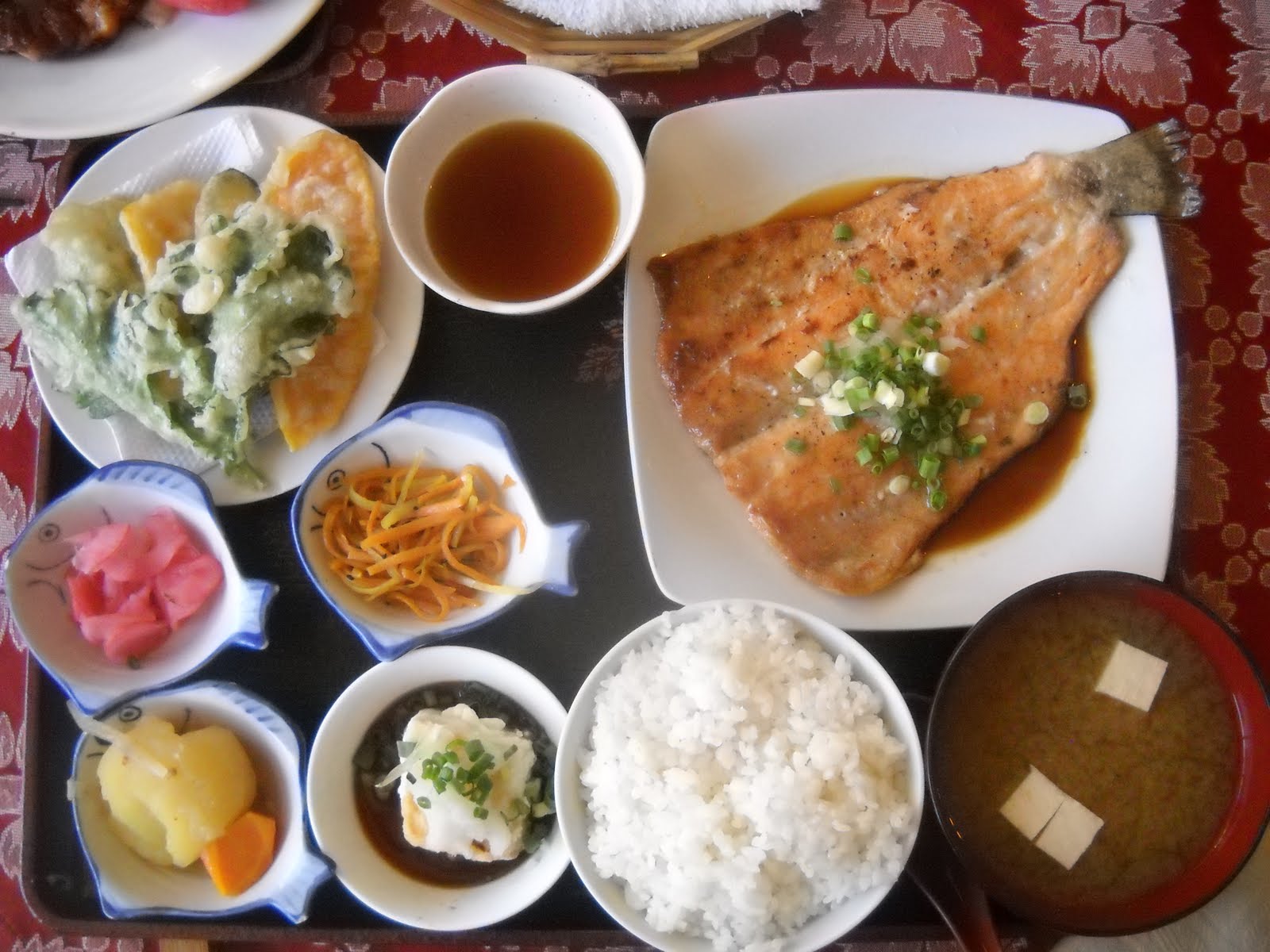
The first thing we do is go to Ken-chan. With food between US $5-7 this Japanese restaurant is not cheap for Bolivia, but it can get busy with locals. Also, it is the cheapest Japanese-owned Japanese restaurant and a must-go destination for Japanese travelers. We meet one homesick woman who has eaten there every day in La Paz. We end up going twice and eating Ken-chan's famous trout sashimi fresh from Bolivia's Lake Titicaca.
 |
| Set menu with trout |
 |
| Trout Chirashi - Sushi rice in a bowl with goodies on top including trout sashimi |
We find another place built inside an old carriage house that has set lunches for 28 B (US $4). Again, this is quite a lot for Bolivia, but the place is always busy with locals and we have the luxury of thinking in dollars when necessary.
 |
| A former carriage house from colonial times |
 |
| Vegetarian lasagna, soup, salad bar and dessert for $4 |
Now I would be lying if I have given you the impression that we are wining and dining every day in La Paz because the truth is that our most common meal is fried ispi. Ispi is a little fish that lives in Lake Titicaca. The street on the side of our hotel has a row of ladies selling fish with woks of bubbling oil and always with the bite-sized ispi. The crispy ispi are served with corn, potatoes, chuño (a freeze-dried potato created in a five day process of sitting out in freezing mountain temperatures and then the hot sun) and spicy sauce. The plate costs 10 B (US $1.44).
 |
| A fish fry stall |
 |
| Ispi |
Life As Normal
One of the things I love best about the traveling lifestyle/life choice is being free from all the banalities of the real world. We have just two bills to pay every month, our mortgage (which I would happily do without) and a very reasonable credit card bill - both of which I guess do keep me from completely floating away from society's norms on a bouquet of helium balloons. Yet we have no gas, electric, water, sewage, phone, cellphone, cable and internet bills to think about. Our four big box store credit cards with their endless zero-interest temptations have been rendered useless on in South America. Annoying neighbors, telemarketers, coworkers and bosses have no place in our life. Neither do car payments, car insurance, car maintenance and fluctuating prices at the pump. We have no weeds to pull, snow to shovel, an empty refrigerator to fill, credit scores to count nor kids that need to be picked up and dropped off. And as much as I do enjoy living without these responsibilities of modern society, being on the road long enough it is inevitable that something will catch up with me. That time is now in La Paz.
 |
| Street art |
The first thing I need to do is make a doctor's appointment. After a few phone calls I end up going to an office in one of the fanciest parts of the city. When it is time to pay the 150 B (US $21) visit, we find out my credit card/ATM card has expired at the end of July. Uh oh! We are kind of low on cash and I have to arrange the new one to be sent DHL express for US $52. Denver - La Paz only takes 48 hrs, and those two days were spent trying to spend as little cash as possible.
 |
| View from our hotel room window |
Meanwhile I learn that somehow my website domain name has been hijacked (or also expired and someone else grabbed it) which means that I have been giving people an incorrect website address for who knows how long. To sort out this mess I have to make numerous phone calls to the web host techies to get a new domain name and my website up and running again. Another meanwhile, I head over to La Paz's electronics store street to shop for a new computer since I dropped mine a few weeks ago in Sucre. I learn that the hard drive isn't damaged. I find a guy who can scrounge up the necessary part and replace my cracked screen by if I plop down US $120. Ugh the real world stinks. I miss my helium balloon bouquet.
 |
| La Paz Bus |
Life As Normal: Bonus
One of the normal things missed while traveling is just being able to meet up with family and friends. Sure on the trail you meet nice people and can have pleasant conversation over drink or dinner and it is quite possible that you'll run into people again. One couple that we met in Sucre, we ran into again on the streets of La Paz and Arequipa, Peru and met up for dinner. This is good fun, but it does not make up for those missed connections with family and old friends and facebook just doesn't always cut it.
While in La Paz a friend of mine who I have known since I was thirteen and have not seen in ages happens to be arriving to Bolivia for his PhD research. It is great timing and we have the opportunity to meet twice to catch up just like we would do back home. It just happens to be La Paz, Bolivia.










 Posts
Posts


