This is a travel blog for desktop travelers and other ramblers who want to know the world just a little bit better.

Right now I am living in Quetzaltenango, Guatemala where I'll be settled for a while. Thanks for reading!

Thursday, December 13, 2012

Diaspora for Dummies: 8 Easy Steps to Celebrating Hanukkah in Xela, Guatemala

1) Go to Catholic and Mayan ritual candle shop in the market and purchase 44 candles.


2) And while in the market don't forget your vegetable essentials!


3) Fashion your own Hannukiah from an ice cube tray and aluminum foil.


4) Begin preparing festive meal.


5) Light candles.

6) Eat festive meal.


7) Enjoy Aztec themed Hanukkah gelt from Mexico.


8) Open present won at your work's Christmas raffle.   Repeat x 8. 


Feliz Hanukkah everybody!

Tuesday, April 3, 2012

Quetzaltenango's Greek Fetish


I am not sure what Quetzaltenango's city planners and bigwigs were thinking in the late 1800's/early 1900's, but I do know one thing. It is obvious from the most ornate colonial buildings still standing around town that they all definitely had some type of fetish for Greek style architecture. A short walk through town takes us past the city's main buildings where the architects got freaky with columns galore.


Teatro Municipal (Municipal Theatre)
Built in 1894, this place is still going strong with events happening quite frequently. I just went to a free jazz concert here last week. Though the seats are wooden and uncomfortable. I guess the ancient Greeks didn't like cushions either.


The following photos were taken in and around the town's central plaza (parque central) which is adorned with columns on the northern and southern side and a round columned gazebo-type thing in the middle. In Quetzaltenango, the central plaza holds a lot of festivals and events during the year. Interestingly (though not really) there is no Greek festival.
A doggie beauty competition at the parque central
The Municipal Palace
The Town Hall was completed in 1895, rebuilt in 1903 after a huge earthquake and sits on the eastern edge of the central plaza.

Inside the Municipal Palace

Casa de la Cultura
At the southern end of the parque central is the Casa de la Cultura. It was built in 1870's over a church cemetery, so it kind of makes sense that it now houses the natural history museum full of dead, taxidermied animals and fossils. It was originally used a prison and storage warehouse. In 1955, it became the cultural center that it is today.


Rotunda
I am not really sure what this thing is called or when it was built exactly, so I am just calling it "Rotunda." This sits in the middle of parque central and is used in the evenings and weekends as a meet up/hang out point for Quetzaltenango's young people to chat, make out, and breakdance--just as I am sure the original Greek fetishing architects envisioned.  


Minerva Temple
The Minerva Temple (Minerva is actually the Roman goddess-not Greek, but close enough for my purposes) is a city landmark about a twenty minute walk from the parque central. It was started in 1914 at the behest of the Guatemalan president at the time to symbolize his plans to modernize Guatemala and to create a cultural powerhouse of Central America. The fact that it took until 1973 to complete, is a very fitting metaphor for the pace of modernization and the cultural stalwartness of Guatemala.


Wednesday, January 11, 2012

My Volunteering Profile in Guatemala

Well, it looks like that I'm moving up in the world. As some of you know (and probably more don't know considering there are 6 billion people in the world), I have been volunteering with Habitat for Humanity Guatemala for about three months now as a Profiles volunteer. I will soon be promoted to the Profiles coordinator. The new job will mostly be office-bound, so I figured I should get some of my recent photos out there before they become obsolete.

Habitat's main goal is to provide people with adequate housing. They offer no interest loans and support throughout the whole building process. Since 1979 they have been involved in building over 35,000 homes in Guatemala. Check Habitat for Humanity Guatemala's website here for more info: http://www.habitatguate.org

Being a well-known organization, Habitat gets many volunteer groups from mostly North America and Europe who generously donate their time and money to come down to Guatemala and help out with all types of labor on a Habitat building site. The groups are usually only here for a week and, therefore, never have the opportunity to see the completed house. This is where the Profiles volunteer comes in.

A family in front of the one-room shack where they used to live and their new house:


After the groups are long gone, the Profiles volunteers are sent out to interview the families and to take photos of the finished home. In theory, the homes are supposed to be completed and the family happily living in them, but I would say only about 70% are done by the time I arrive. I visited one rural home where they told me that they would be able to move in when the government arrived to hook up the electricity. In this area it can take up to eight months for them to come out there -- think about that the next time the cable guy tells you it will take a couple days! The info and photos are then sent off to the groups so they can see the finished product and stay connected with Habitat. We also visit families whose houses are part of the dedication program and families who have received emergency housing assistance after natural disasters.

Houses donated to people who lost their homes during Hurricane Agatha:


Now these Habitat homes are literally anywhere and everywhere around the country (B.F.G?) which makes the Profiles volunteer job, at times, physically grueling, a real endurance test. The Profiles volunteer is accompanied by a Guatemalan promoter from the local office who drives us around on a motorbike to meet the families. Habitat, unfortunately, does not have the funding for pick-ups and SUV's, so motorbikes it is.

Some homes way out in the countryside:


An extreme example: I left my house at 6 AM to take a chicken bus (chicken bus = Guatemalan inter-city transportation = old, American school buses jammed pack with people driven at breakneck speeds) for three hours to the city, El Quiche. Then from 9:30 AM to 6 PM minus an hour for lunch I was on the back of the motorbike to visit just four families. For the last family that day we had to walk up a huge dirt hill for twenty minutes because the bike couldn't make it. The next morning I woke up early to visit a family who wasn't there when we went the day before. Then that afternoon it was another two and a half hours on the back of a motorbike to get to Nebaj to visit three more families. We leave at 6 AM the next morning-2 1/2 hrs back to El Quiche- and after lunch I meet two more families and then chicken bus for three hours back to Xela, my hometown. A serious butt-kicking Profiles mission.

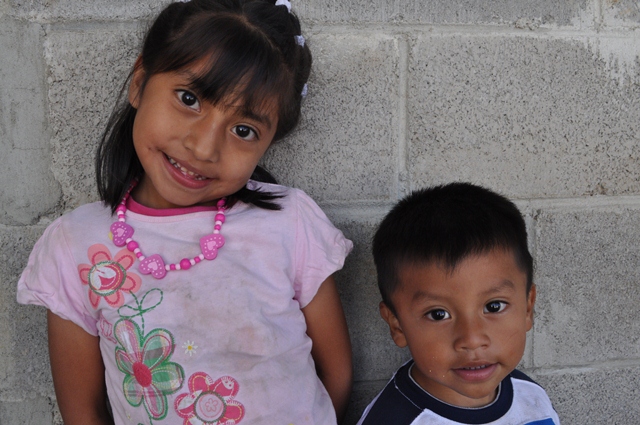
So here are a few of the photos that I've taken over the past few months. It is definitely not ground-breaking photography - basically just interior and exterior photos of the home and some portraits. The houses are always simple cement block homes. The families are always friendly though sometimes deathly shy, but almost always do their best to accommodate me and my invasion of privacy. I have found that taking photos of the kids first is the best way to break the ice. They definitely don't share their parents inhibitions.


They'll probably never see this, but I would like to say thanks to all of these families (and those not shown) for letting us take photos which in a way helps to keep the program going.

Thursday, December 29, 2011

The $5 Shopping Challenge in Xela

Some Guatemalan quetzals
The $5 Shopping Challenge
One of the best things about traveling and living in other countries has got to be the never-ending game of price comparison with where we are from and what we know. Whether it's oohing over the twenty-five dollar watermelons in Japan or aahing over the obscene amount of bananas one can get for $1 in Ecuador, I think everyone likes to play.

So with that in mind, what I have done for this blog post is to go out to a typical market on a typical shopping trip in my current hometown of Quetzaltenago (better known as Xela) and record what I can get for around five US dollars which equals about 39 Guatemalan quetzals. Admittedly, I am not the best bargainer, but most of the ladies here are honest enough, and they almost all offer the same prices anyway. Usually my shopping conversations go something  like this:

Me: "How much for a pound of tomatoes?"
Seller: "3.50, but for you 3."
Me: "2.50?"
Seller: "No."
Me: "Okay, give me a pound. How much for a cucumber?"
Seller: "2.50, but for you 2."
etc, etc

But before we get to the results of my shopping challenge let's look at some background info...


Welcome to the Market
There are four markets that I know of in Xela. One is small, easily managable, indoors, and near the Parque Central, another small one is Mercado Las Flores (Flowers Market) near the large municipal cemetery which could be how it got its name, the third is Minerva Market near the bus terminal which is huge, normally chaotic, and has a large section dedicated to secondhand clothing. The final market, La Democracia, sits right in the center of town and competes with Minerva for title of 'Xela's largest'. The indoor market part of La Demo encompasses an entire city block with everything sold here from pigs feet to push brooms and from pastries to hand-woven tapestries. The market than spills out onto the surrounding streets in every direction with specific blocks dedicated to clothes, food, and pirated CD/DVDs. La Demo also happens to be only four blocks from our house so the market of choice for our fruits and vegetables shopping.
A street outside La Demo market. Normally there is traffic access, but for the holiday season the street has been completely covered in temporary stalls selling even more stuff

Use the Sales Force
In most all Guatemalan markets there are three types of fruit and vegetable sellers (98.8% female):

The fixed stall sellers who use tables or stalls and carry either the widest selection of items or a mountain of one particular item.

The on-the-ground sellers who sit on tiny stools or the ground with their goods in baskets or on a blanket. They'll have anywhere from one item-one bucket to getting very ambitious with a lot on offer

The ambulatory sellers are the rarest type, who walk around selling just one item. This could be a good chance to see a guy selling something.
A very ambitious on-the-ground seller

The Results Are In
My shopping formula:
Quantity of Item = price in Guatemalan quetzals = price in US dollars

1lb of Tomatoes = Q3    =  $0.38
1lb of Onions     = Q3    =  $0.38
Half dz. Carrots = Q2.5 =  $0.32
3 Avocados       = Q7.5 =  $0.96
2 Cucumbers     = Q4    =  $0.51
bunch Spinach   = Q4    =  $0.51
bunch Radishes  = Q3    =  $0.38
Pineapple           = Q7   =  $0.90
3 head Garlic     = Q3    = $0.38
Today's Total     = Q37  = $4.72


The results coming in at $0.28 under $5

So how'd I do? Not bad, right. So now it's your turn to take the $5 challenge and let us know in the comments below what five bucks gets you at your favorite local (super)market.

Tuesday, November 22, 2011

Chicago Nobody


Having traveled for a while in South America and Asia I am used to uncomfortable travel. Long bus rides, delays and just waiting around is pretty normal to me which is probably why I booked a terrible (cheapest) flight ticket from Denver to Guatemala without even thinking about the consequences. However, as I soon discovered, this type of travel does not translate well in the USA. Airports are too big, everything is expensive and the ever-burning flourecent lights wreak havoc on my natural bio-clock (think casino without gambling or slot machines).

My flight from Denver to Chicago arrives at 11:15 PM and my connection to Guatemala is at 5:30 AM the next day. No big deal, I'll sleep in the airport, right? Usually my concern with sleeping in any public place is that someone will walk off with my stuff if I doze off, but in Chicago (the third largest city in the USA) this should not be a problem. I am sure plenty of fellow travel zombies will be out. Boy was I wrong, there was nobody.

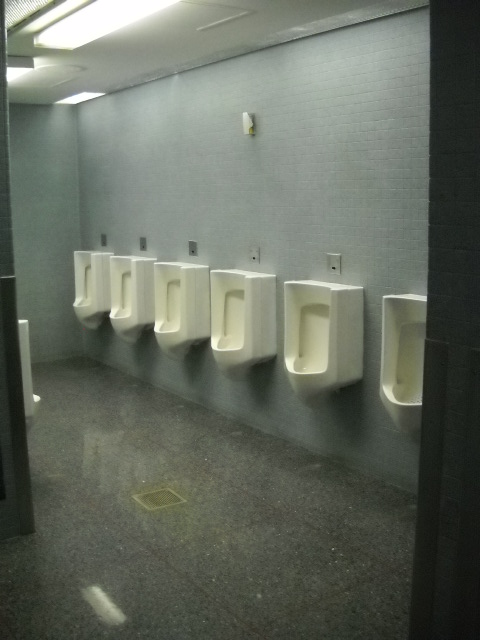
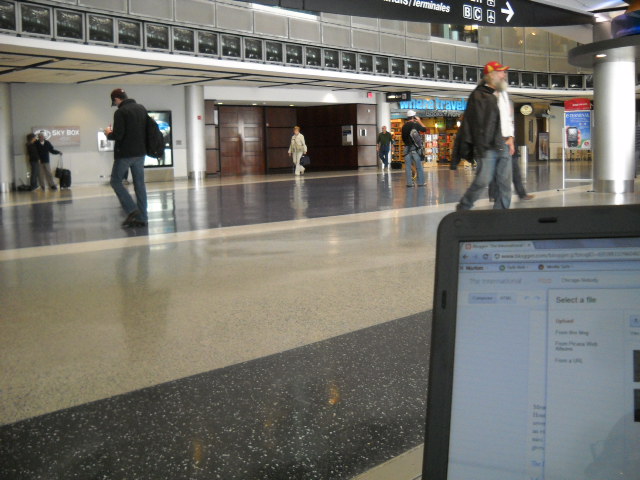
According to statistics from 2010, Chicago's O'Hare airport is the third busiest in the world. Almost 67,000,000 passengers passed through in 2010. And from 1 - 4 AM, I saw maybe five of those 67 million plus a skeleton crew: cleaning toilets, hanging Christmas decorations, waiting for no one to pass through security and manning the open-24hrs Dunkin Donuts at the food court in terminal H.

Some photos from the world's third busiest airport:


Meanwhile at 4:30AM, when the airport begins to come alive again, my airline tells me that I have to stop in Houston for a plane change even though it is the same flight (I am confused also). Anyway, me and the other seven passengers headed to Guatemala from Chicago get screwed because we have to circle in the air for an extra hour waiting for clearance to land. Because the airline did not give us enough connection time we all miss our same flight (but not same airplane) connection and have to take the 7 PM flight to Guatemala which gives me 10 more hours of hanging around an airport.... and I thought bus travel in Bolivia was bad.

The International Rambler Travel Tip:


I do not want to get into a rant about how there isn't free wifi at US airports, so I will just say this: Guatemala's airport has free wifi throughout and free PS2 stations. Why can't major US airports do it too? Anyway, if you find yourself in Houston airport and not wanting to pay for some stupid internet provider feel free to loiter outside the United Airlines club in terminal E and use their signal.
My view of doors to United club